AI agents for finance operations.
Our agents automate recurring workflows across close, AP, AR and FP&A, helping finance teams catch exceptions sooner and keep supporting evidence ready for review.
Close
Tasks to complete before an accounting period can be closed.
June 2026
Target close Jul 10
6 of 10 done
- 6Done
- 1Running
- 1Awaiting approval
- 1Needs input
- 1Not started
Cash & banking
Bank reconciliation — operating account
Reconcile the June operating account and prepare the workpaper.
One deposit of $4,250.00 has no matching invoice. The agent needs the customer's remittance advice to finish the match.
Needs inputMCMegan CarterJul 2
Close controls
Trial balance integrity review
Tie the trial balance to control accounts and subledgers.
DoneJul 2Manual journal-entry review
Test June manual entries for support and approval.
DoneJul 2
Payables & expenses
AP aging and unrecorded liabilities
Review aging and search for unrecorded liabilities.
DoneJul 6Employee and corporate-card expenses
Match card spend to receipts and code to the GL.
RunningJul 6Vendor credits and prepaid balances
Clear open credits and roll forward prepaid vendors.
DoneJul 6
Payroll & people
Payroll accrual
Accrue June wages earned but not yet paid.
Awaiting approvalABAshley BrooksJul 6Bonus and commission accrual
Calculate earned but unpaid bonuses and commissions.
DoneJul 7PTO and benefits accrual
Update PTO and employee-benefit liabilities.
DoneJul 7
Reporting
P&L variance analysis
Explain material May-to-June P&L movements.
Not startedJul 8
Empty Spaces has become our new operating system. It gives us a clearer view of our operations and surfaces the insights we need to run the company better.
Why Empty Spaces
Your team reviews the work instead of assembling it.
Our agents prepare the work. Your team makes the decisions.
Agents pull the records, match transactions and draft reconciliations, entries and reports, so each task arrives ready for review.
Instead ofExports, lookups and workpapers built by hand.
Agents work through every transaction and flag what doesn't tie, with the likely cause, before it holds up the close or a payment.
Instead ofSpot checks, and surprises found at month-end.
Each finding, entry and report links back to the records it rests on, so review goes faster and audit requests are easier to answer.
Instead ofChasing the source after someone asks for it.
More vendors, customers and transactions don't have to mean more manual hours. Your team's time goes to exceptions and decisions.
Instead ofHiring to keep up with transaction volume.
Bank reconciliation
1020 · Payroll account · June
- Balance per bank statement
- $1,248,630.00
- Outstanding checks
- −$18,420.00
- Deposits in transit
- +$6,250.00
- Adjusted bank balance
- $1,236,460.00
- Balance per ledger
- $1,236,460.00
- Difference
- $0.00
Product
One platform across the finance function.
Start with the workflow that needs attention. Our agents bring together the records and context needed to complete the work across close, payables, receivables and reporting.
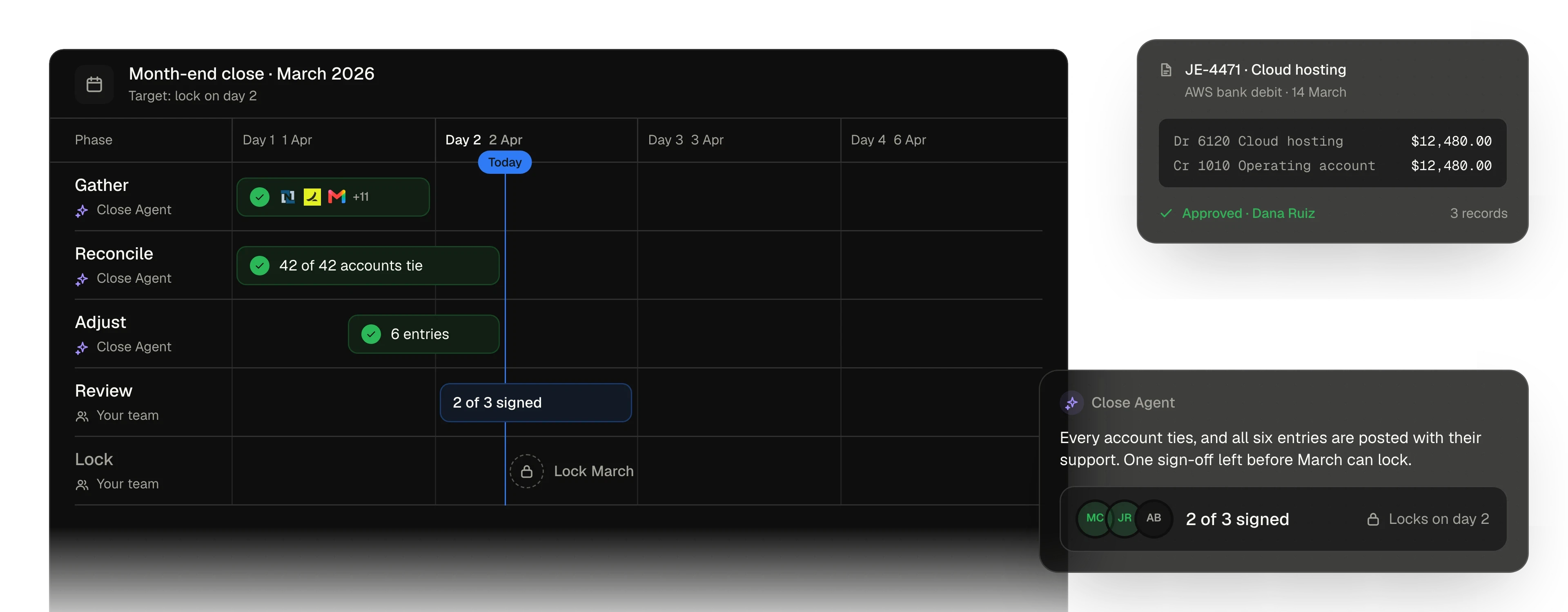
Autonomous Close
Move the close forward with less manual work.
Prepare reconciliations, investigate exceptions and draft supported journal entries. Keep outstanding work and reviews visible in one workspace.
Explore Autonomous Close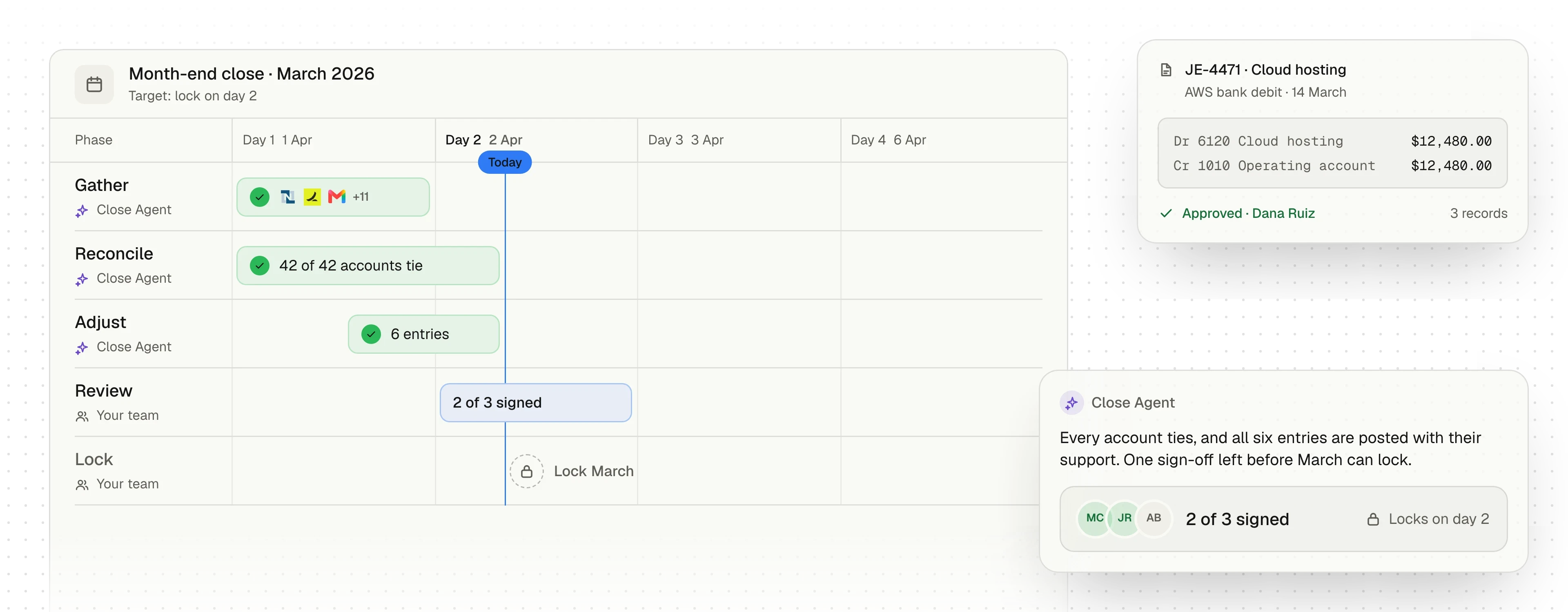
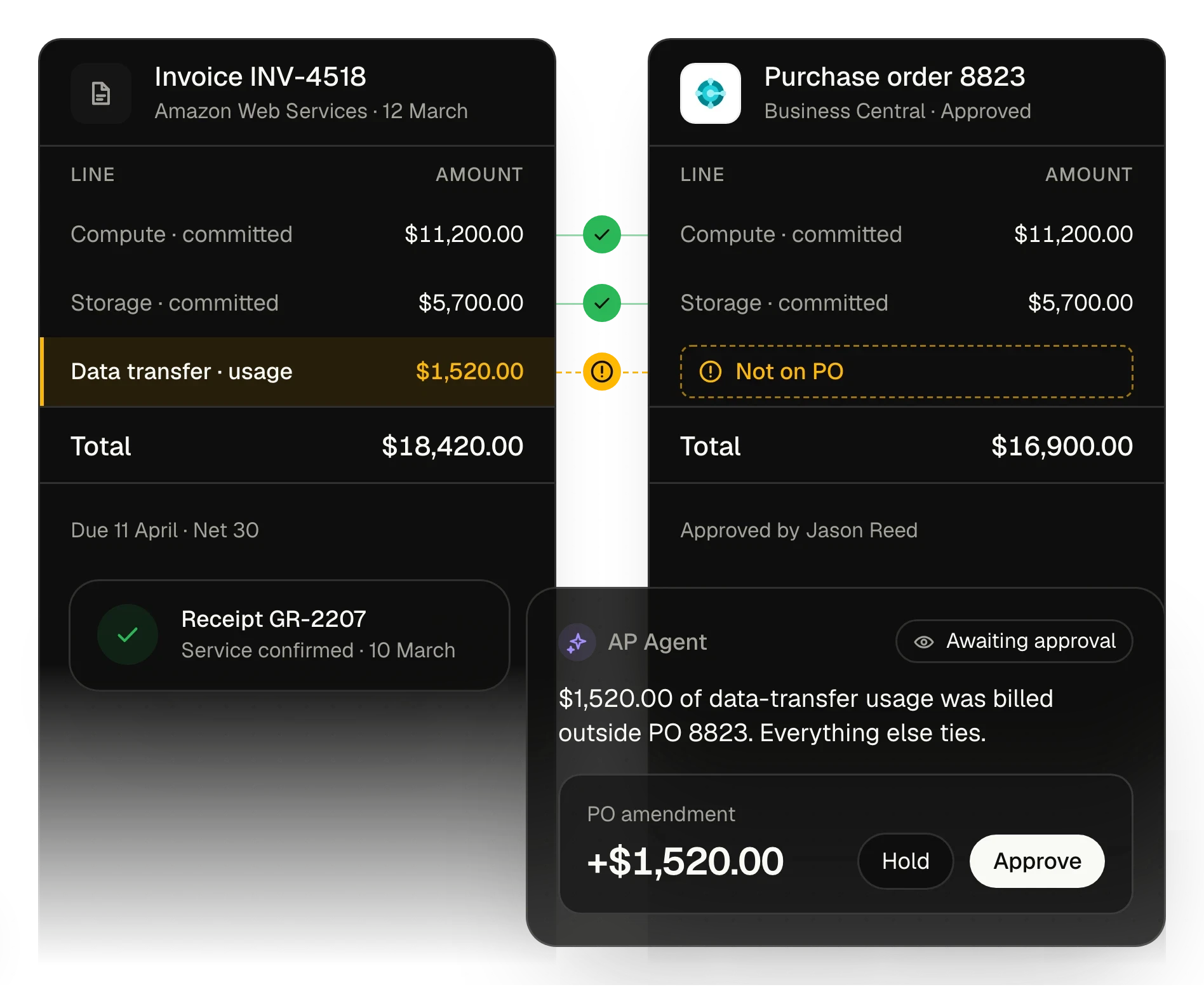
Accounts Payable
Resolve invoice discrepancies before payment.
Compare invoices with purchase orders, receipts and supporting records. Investigate differences and prepare the next action for approval.
Explore Accounts Payable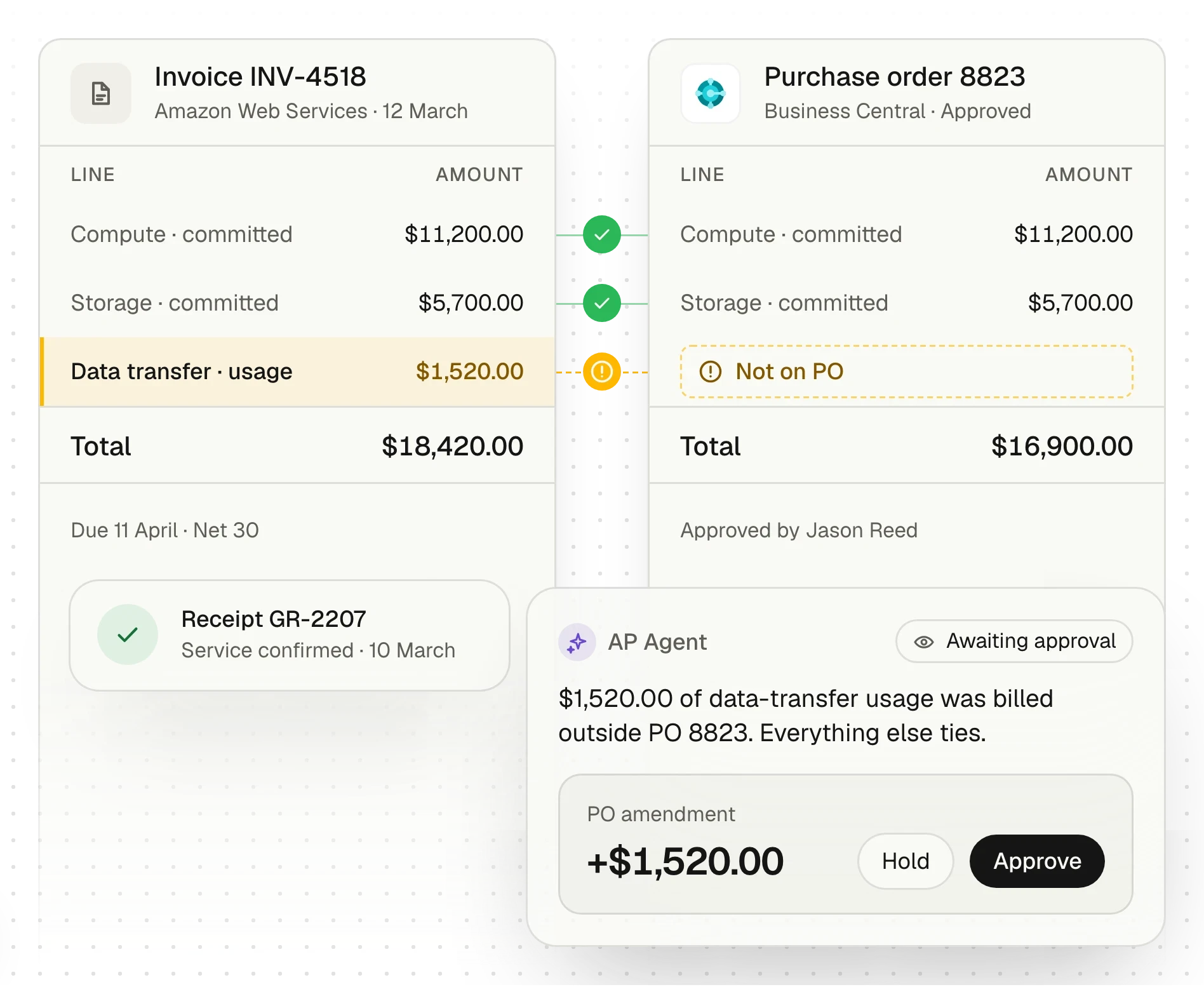
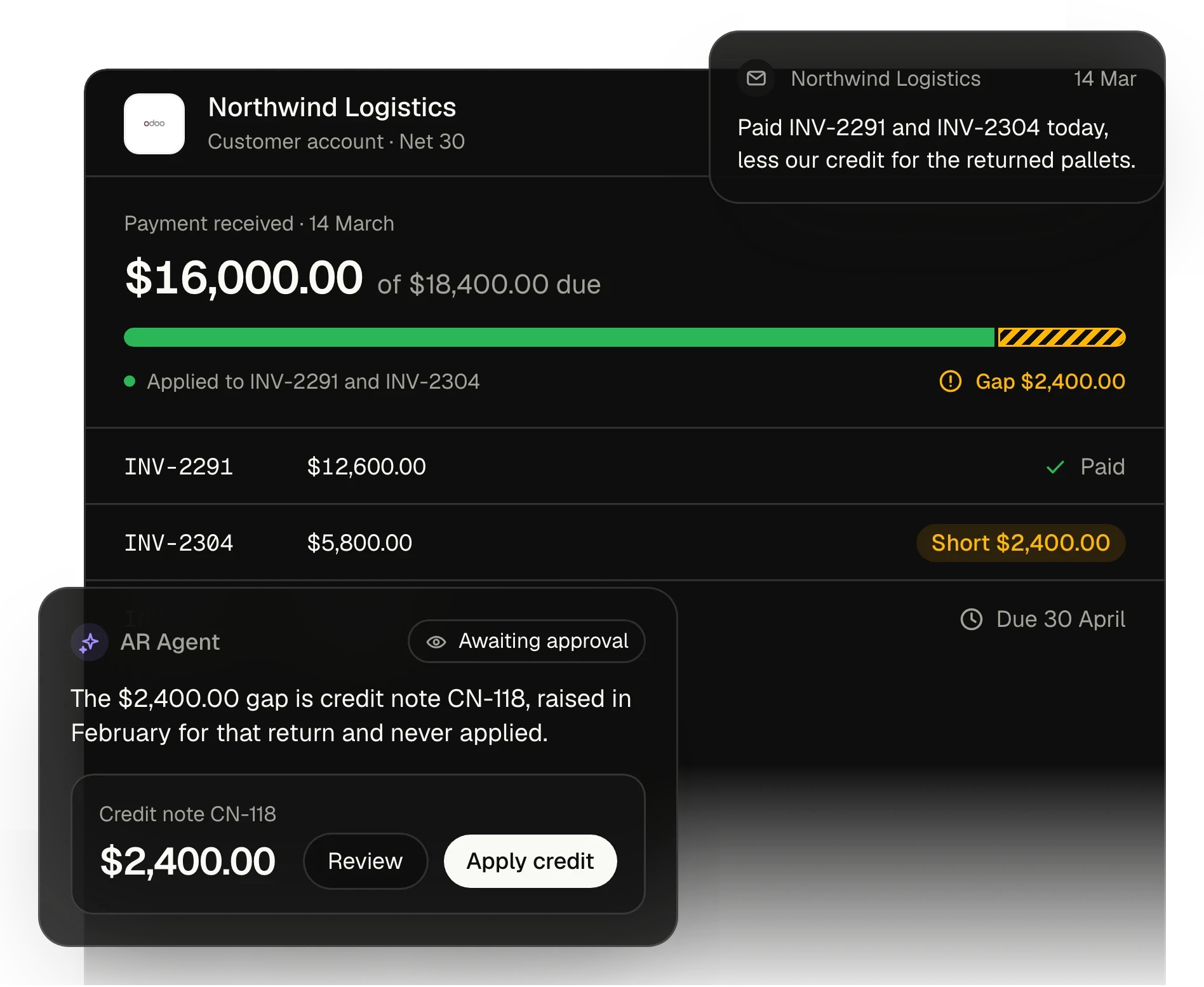
Accounts Receivable
Clear payment issues and move collections forward.
Bring invoices, payments, credits and communications together to investigate disputes and unapplied cash.
Explore Accounts Receivable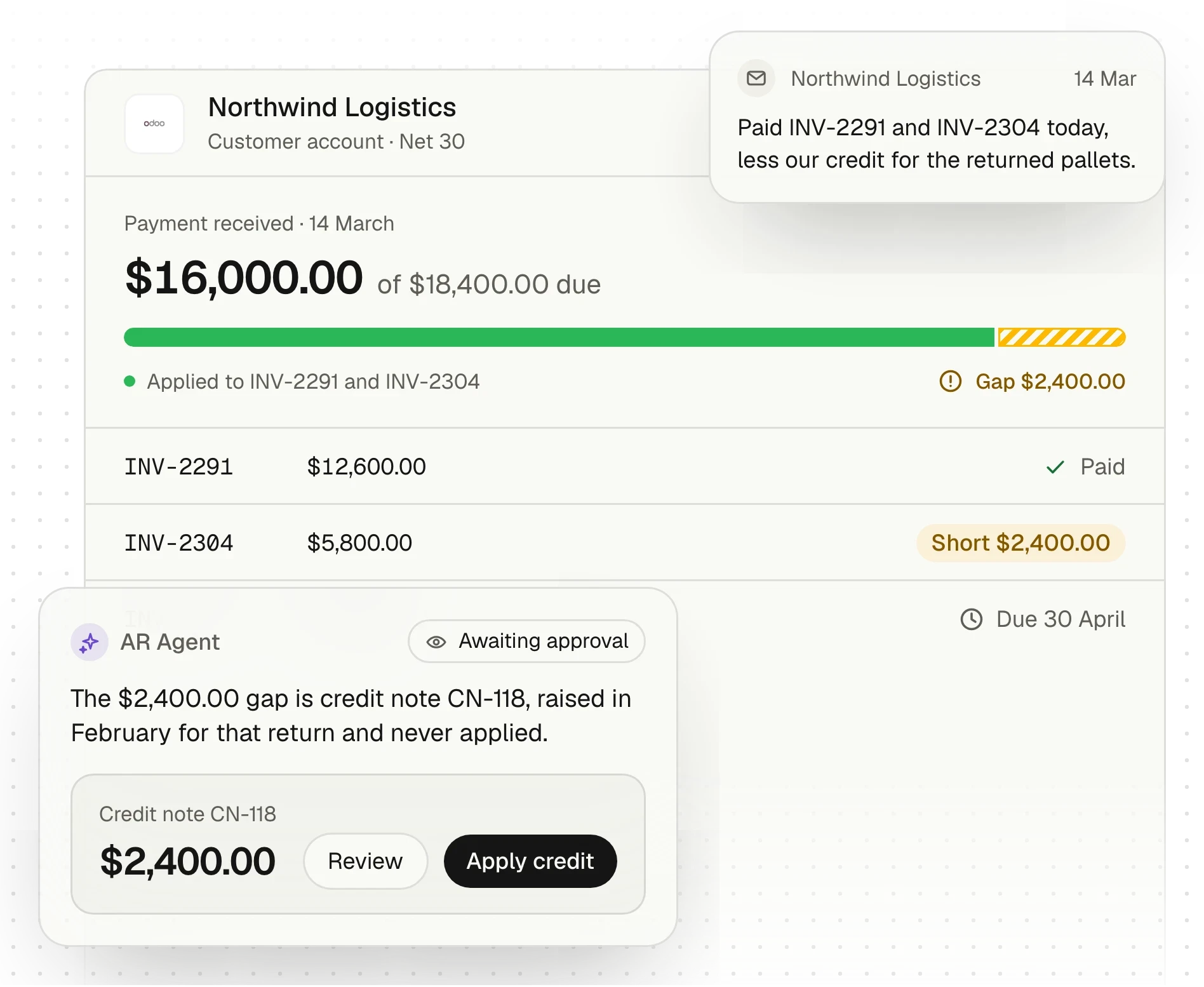
FP&A
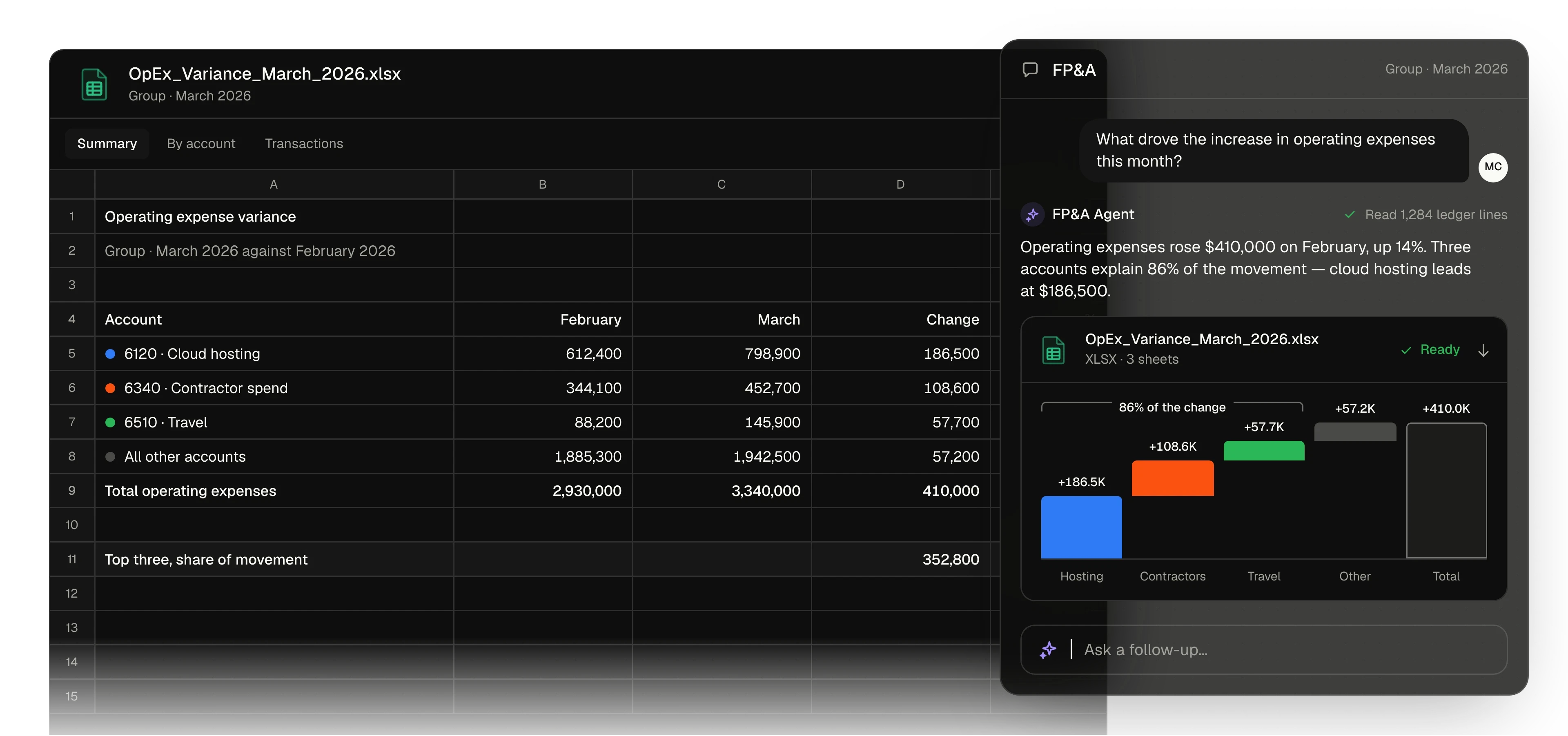
Get from a finance question to a finished report.
Ask questions across financial and operating data. Our FP&A Agent investigates the numbers and produces explanations, workbooks and reports with supporting sources.
Explore FP&A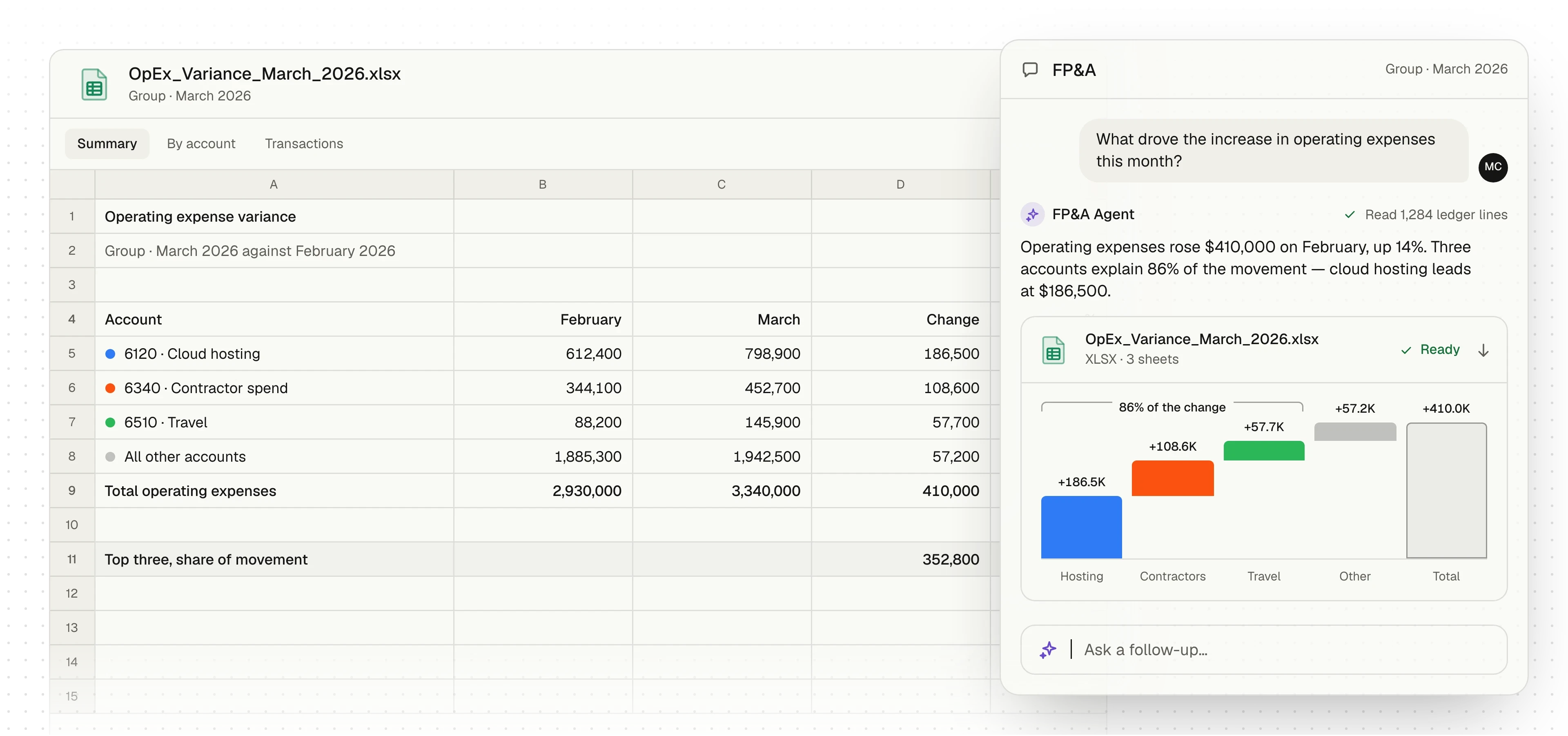
Platform
The agentic platform under the finance work. Your systems, your models, your procedures and your controls, with a record of every step.
Reads the systems your finance team runs on, and writes back once you approve.










Your method, followed every time.
Write how your team does the work once, as a skill. Every agent follows it, and changes to your records ask for approval by default.
Your cloud, your models, your keys.
Runs in your own AWS account and region. Choose the model providers, bring your own keys and set daily and monthly spend limits.
Every step on the record.
Separation of duties enforced, an append-only activity log, and a trace of every agent run with its cost.


Integrations
Works with the systems you already use.
Connect the finance systems, operating data and documents your workflow depends on.
View integrations- NetSuite
- SAP S/4HANA
- Business Central
- QuickBooks
- Odoo
- Plaid
- Ramp
- Brex
- BILL
- Snowflake
- PostgreSQL
- Oracle Database
- Salesforce
- Zoho CRM
- Gmail
- Outlook
- Slack
- SharePoint
- Google Drive









Security
Secure by design. Audited to SOC 2.
Everything runs in your own AWS account, behind your identity provider. Nothing posts to your ledger until a person approves it, and every step is logged.
- SOC 2Type I
- SOC 2Type II
Independently audited to SOC 2 Type I and Type II.
- Your cloud and regionRun our agents in your own AWS account, in the region you choose.
- Single sign-onConnect your existing identity provider using SAML or OIDC.
- Role-based accessDefine who can access, run and approve work.
- EncryptionProtect stored data, connections and system credentials.
- Audit historyKeep a record of agent activity, approvals and changes.
- Model controlsChoose supported providers and set usage limits.
Start with one finance workflow.
We work with your team to map the process, connect the required systems and validate the results before rollout.
Plan your first workflowMap the work
Agree the source records, business rules, owners and expected output.
Validate real cases
Run the workflow with a focused team and check the results against the underlying records.
Roll out and expand
Put the agreed workflow into operation, with support as you add more processes.
FAQ
The questions finance teams ask first.
Short answers to what most teams want to know before a working session. The security page has the detail for IT and security.
What do you do?
We give a finance team AI agents for the work that fills the month: the close, accounts payable, accounts receivable and analysis. Each agent reads your systems, prepares the work with its support, and hands it to your team to decide.
Do your agents post, pay or send anything on their own?
No. Our agents propose the entry, bill, match or reply with its evidence. A named approver, who can't be the person who asked, approves the exact lines, and each approval is used once. Payment and customer contact stay with your team.
How approvals workWhich systems do you work with?
Your ERP, bank feeds, AP inbox and CRM, read together, with approved entries written back to the ERP. The full list of connected systems is on its own page.
See connected systemsWhere does our data live?
With you. Everything runs inside your own cloud account, in the region you pick, so your data stays in an environment you own and control, and we never hold a copy of it. If you would rather not run anything yourselves, we set up a private deployment used by you alone. Either way nothing is shared with other customers, and we have completed SOC 2 Type I and Type II audits.
Read the security pageDo you keep our data, or train AI on it?
No to both. We do not train AI models on your data, and do not collect or keep it: it stays in your deployment, and none of it is sent to us by default. The AI models are ones you choose, under your own accounts with Anthropic, OpenAI, Google or Amazon Bedrock, so your agreement with that provider governs what it may do with a request. With Bedrock, requests never leave your AWS account.
How the AI is governedWhich AI models do your agents use?
The ones you allow. Bring your own keys for Anthropic, OpenAI, Google, Amazon Bedrock or an OpenAI-compatible endpoint, limit which models each group may use, and cap spend daily and monthly.
About the AI GatewayDo we have to change how we work?
No. Each task follows a written method, a skill, and your team adapts the built-in ones to the way it already closes, pays and collects. When a task can't be finished, the agent says what's blocking it and waits. It doesn't guess.
About skillsHow do we start?
With one workflow. We map the process with your team, connect the systems it needs and validate real cases against the underlying records before rollout. There is no implementation commitment.
See our agents work through a finance process that matters to your team.
Tell us where the work gets stuck. We’ll walk through how the agents could help.
No implementation commitment.